

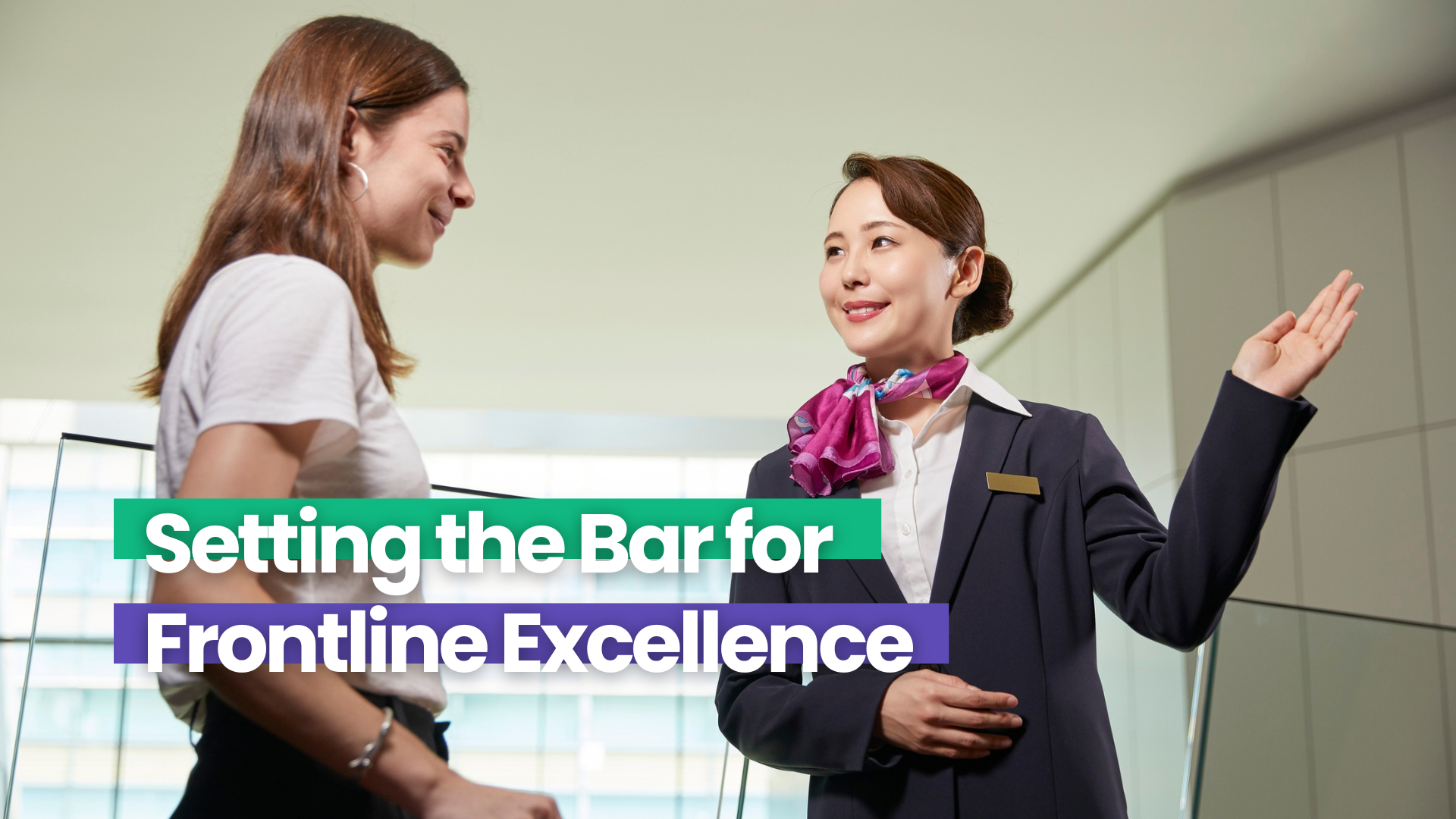
In high-performing organizations, every customer interaction follows the same principles: clear communication, accurate information, and confident service. The challenge is maintaining that consistency across dozens, hundreds, or even thousands of frontline employees.
Without a structured way to deliver knowledge and reinforce expectations, service quality becomes unpredictable. Some employees develop expertise quickly, while others rely on outdated information or informal guidance from coworkers. Over time, these inconsistencies add up. Customers receive different answers depending on who they speak with, and managers spend valuable time correcting mistakes.
Setting the bar for frontline excellence means giving every employee the tools and knowledge required to meet the same standard every shift, every location, and every interaction.
The Challenge of Scaling Great Service
Delivering great service with a small team is manageable. Delivering it across a large frontline workforce is far more complex.
Teams grow. New hires join frequently. Products, policies, and procedures change. Yet many organizations still rely on informal training methods like documents, quick explanations from managers, or occasional workshops.
These approaches rarely scale. Information becomes fragmented, updates take time to reach everyone, and employees are left to fill in the gaps themselves.
Excellence Requires Accessible Knowledge
Frontline employees perform best when the right information is easy to find and easy to understand. When knowledge is accessible, employees can focus on helping customers instead of second-guessing their decisions.
Modern training strategies address this by delivering information through short, structured lessons that employees can revisit when needed. Instead of overwhelming teams with lengthy manuals or one-time sessions, learning becomes something that supports daily performance.
Employees can quickly refresh product knowledge, review policies, or prepare for common scenarios they encounter on the job.
Practice Builds Confidence
Practice plays a critical role in effective training. When employees can rehearse real-world situations before they encounter them with customers, they develop the confidence needed to respond clearly and consistently.
Interactive learning experiences and simulated scenarios allow employees to practice handling questions, resolving issues, and navigating policies in a safe environment. By the time those situations happen in real life, employees are better prepared to respond with confidence.
Supporting Teams Without Adding Complexity
One of the biggest misconceptions about improving frontline performance is that it requires more resources: more workshops, more trainers, or more time away from the floor. In reality, the most effective improvements often come from simplifying how knowledge is shared and reinforced.
A training platform designed specifically for frontline environments centralizes company knowledge and transforms it into structured learning experiences. Policies, procedures, product updates, and service guidelines become easy for employees to access, understand, and practice.
This approach reduces the burden on managers as well. Instead of repeating the same explanations to every new hire, leaders can focus on coaching and performance while employees independently build the knowledge they need.
Raising the Standard
Setting the bar for frontline excellence doesn’t require endless training sessions or additional resources. It requires a system that ensures every employee has access to the knowledge, practice, and support needed to succeed.
Platforms like PETE help organizations make this possible by transforming company knowledge into interactive training, simulations, and structured learning experiences designed specifically for frontline teams.
When employees can quickly access information, practice real scenarios, and build confidence through guided learning, excellence becomes repeatable. And when excellence becomes repeatable, every customer interaction reflects the standard your organization is aiming to achieve.


