

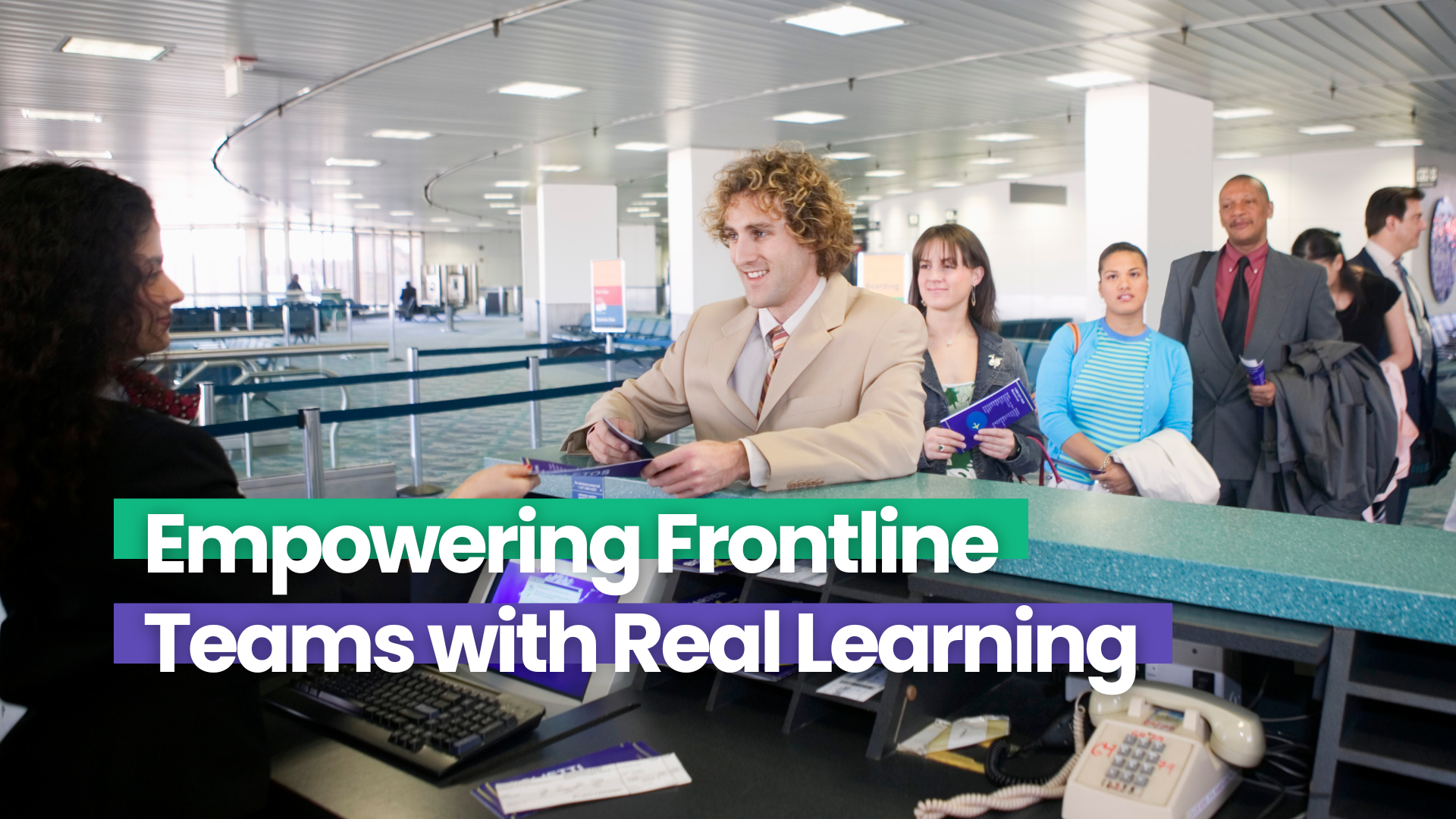
Frontline teams operate in fast-moving environments where customer expectations are high and mistakes are immediately visible. They answer questions, solve problems, and represent the brand in real time. Yet despite how critical their role is, many organizations still rely on outdated training methods that don’t match the realities of frontline work.
In many cases, training still means sending out PDFs, slide decks, or policy documents and expecting employees to read and apply them on the job. It’s simple to distribute, but it rarely leads to real understanding or consistent performance on the ground.
Why Traditional Frontline Training Falls Short
Static training materials were not designed for the pace or complexity of frontline environments. They assume employees have time to sit down, review content carefully, and retain it long enough to apply it later. In reality, that rarely happens.
Frontline employees are constantly switching between tasks, handling customer interactions, and making decisions under pressure. Without practice or reinforcement, most of what they read is quickly forgotten or inconsistently applied.
This leads to common issues such as:
- Different interpretations of policies across teams
- Inconsistent service quality across shifts and locations
- New hires relying on guesswork
The Missing Link: Proof of Learning
One of the biggest challenges with traditional training is the lack of visibility into whether learning actually happened. Managers can confirm that materials were distributed, but they can’t always confirm understanding or readiness.
That creates a gap between training and real performance. Problems are often only discovered after mistakes happen, rather than being addressed during learning.
For frontline teams, that gap is where risk builds. Small misunderstandings can quickly escalate into customer issues.
What Effective Frontline Learning Looks Like
Frontline training is most effective when it reflects real job conditions. Instead of passive reading, it should focus on interaction, repetition, and application.
Modern approaches typically include:
- Short, focused lessons that fit into daily workflows
- Scenario-based simulations based on real customer situations
- Built-in assessments to check understanding
- Immediate feedback to correct mistakes early
Turning Existing Content Into Real Training
Most organizations already have enough training material like manuals, SOPs, and internal documentation, but not enough people are using it or have the time to read through it.
When left in static formats, this information is hard to apply in real situations. Modern training platforms solve this by turning existing content into structured, interactive learning experiences.
Instead of reading long documents, employees move through guided lessons, simulations, and knowledge checks that reinforce real application.
Why Practice Builds Better Performance
Confidence comes from doing, so employees who practice realistic scenarios are better prepared when similar situations happen in real life.
With simulation-based learning, employees:
- Respond more naturally to customers
- Make faster, more accurate decisions
- Rely less on escalation or supervision
The result is more consistent performance and better customer experiences.
Platforms like PETE reinforce this kind of learning with on-the-job support, giving employees instant access to answers from training content and company knowledge while they’re working. Instead of searching through documents or waiting for a manager, they can quickly clarify what they need in the moment.
Better Visibility for Managers
Interactive training also gives managers clearer insight into readiness. Instead of relying only on completion status, they can see how employees are performing during training.
This includes progress tracking, assessment results, and areas where employees struggle. With that visibility, coaching becomes more targeted and effective, and training becomes an ongoing improvement system rather than a one-time rollout.
When organizations move from static content to interactive, scenario-based learning, they close the gap between information and performance, helping employees build confidence through practice, managers gain visibility into readiness, and customers receive more consistent service.


